A Psychologist’s Take on The Tartan Army
Belonging, Shared Purpose and Hope
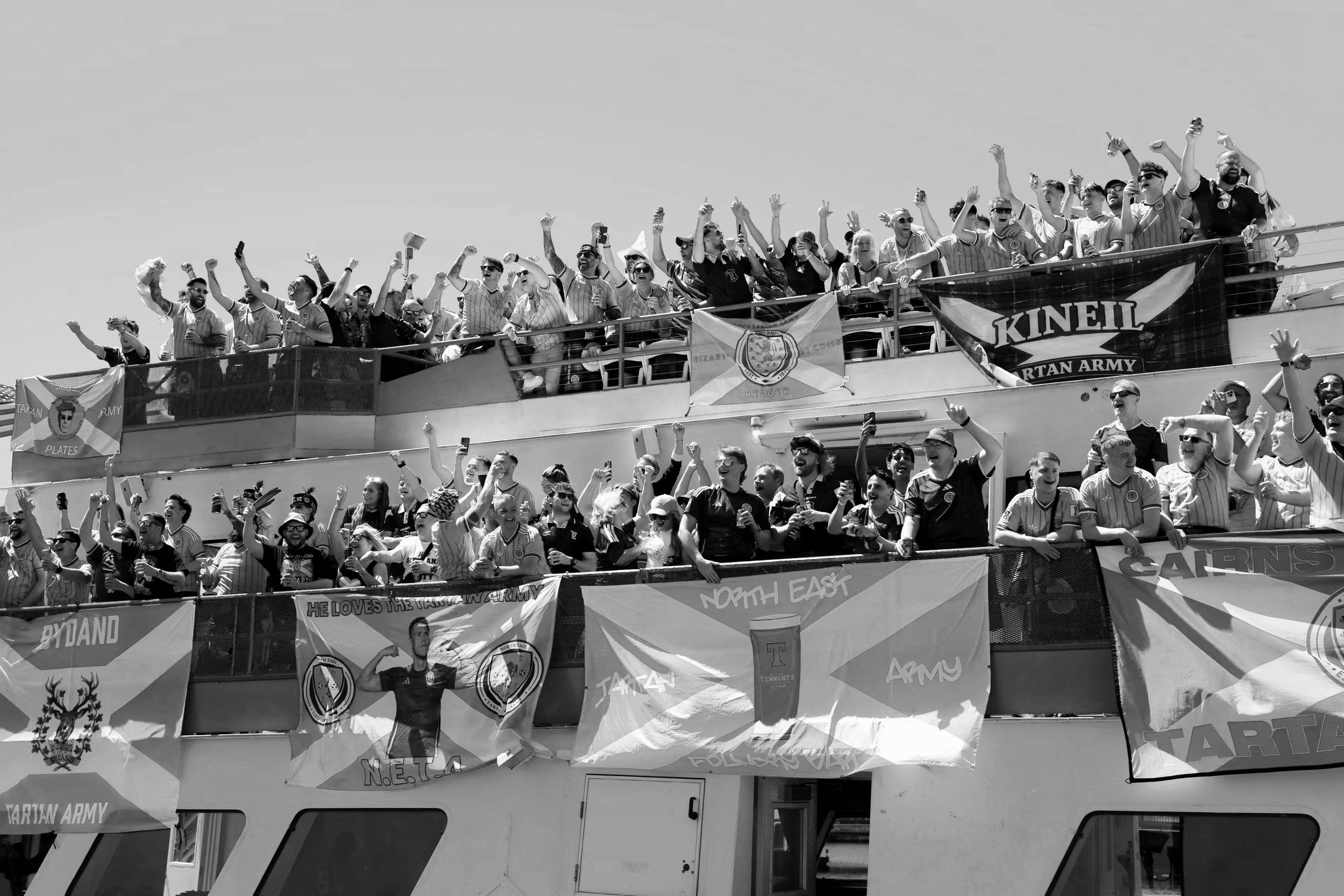
It’s hard to tell whether summer has arrived or not, but what we do know for sure is that the World Cup has kicked off. Needless to say, the excitement levels of the average Scottish person will be, I imagine, exponentially higher than during previous tournaments. Because, this year the team have made it after a long 28 years - which I’m sure you’ll know unless you have been living under a weighty rock.
I’ll say this up front – this is not a blog about football. And I don’t want to mislead any of you to think that I’m an avid football fan - I’m the kind of fan who rallies around when the national team are playing or when the stakes are high. I do not know the offside rule and I get overly excited by penalties. There must be a name for this kind of fan? Anyway, this blog is about fundamental human needs. It is about what the psychological ingredients are that make up The Tartan Army, and it’s about belonging, shared purpose and hope.
Belonging
I think we probably all agree that The Tartan Army is a strong community and its members feel a strong sense of belonging. As human beings, we have an intrinsic need to feel like we belong from the day we are born, to the day we die. The sense that we are all in it together. We can see this sense of belonging throughout various moments in history including during wars, natural disasters and pandemics. The World Cup may be very different from some of these events, yet it evokes many of the same processes. Belonging helps us feel socially safe which in turn, creates balance within ourselves and gives us the confidence to explore the world. What constitutes community, or provides feelings of belonging, will differ for us all and we may belong to several different communities - which can be double edged if they tug us in different directions.
We shouldn’t underestimate the power of community and belonging. Indeed, it has played a big part in helping humans evolve and has allowed us to exist for millions of years. The drive to feel like we belong is a deeply ingrained biological blueprint, quietly shaping the way our brain, mind and body operates. Being part of a community is not always easy. It requires a level of vulnerability when we show up, join in and hope to be seen because the outcome may not be the desired one.
We live in a world where there are increasing barriers and exclusions to belonging and community. Sometimes, we can be part of a community yet we struggle to feel that we belong, and vice versa. With levels of loneliness at an all-time high – what does that tell us about our communities and feelings of belonging? I read that there is one Scottish pub in Boston (who’s probably cashing in right about now) where the Scots have unsurprisingly gathered.
Shared Purpose
The common goal of the Tartan Army is a desire for Scotland to win, or at the very least, do a good job. We know that having a shared purpose in a group improves connection and creates a sense of togetherness. It helps cement a community between individuals who may otherwise, not have anything in common. Whatever the shared purpose is about, it shifts our attention from ourselves, outward to the group. It is less about an individual and more about a collective. A collective where the community sing from the same hymn sheet.
Where there is a shared purpose, people tend to stick at the task longer, and get through challenges that would be more difficult had there not been a shared purpose. It fosters motivation to contribute to something bigger than ourselves. There are many kilts, memes, chants, songs, rituals, face paint all of which signal the shared purpose of The Tartan Army.
Sharing in a purpose improves well-being, increases feelings of fulfilment, achievement and satisfaction. It is a powerful motivator for human beings. It gives us direction, brings people together and creates a sense that we are part of something bigger than ourselves.
Hope
Underneath the very loud and enthusiastic chants of The Tartan Army is hope. If you handed out a survey to members of The Tartan Army about the hope they hold for the tournament, then most likely you would get varying answers - some more optimistic than others. One of the songs I’ve heard online sums it up “we know we ain’t Argentina” .
My guess is that hope is a primary driver for either getting up at 2am in the morning, travelling to the USA or consuming sports content online. Hope and uncertainty tend to go hand in hand. If we knew the outcome then hope wouldn’t be required. And If we know the outcome of the world cup then it would almost certainly take some of the fun out of it. I’m sure not as many fans would fork out the eye-watering costs to travel across the Atlantic ocean or drag themselves out of bed. The emotions would be less intense - the highs and the lows. A major tournament like the world cup represents a lot of uncertainty and relies on us sitting with the unknown.
Despite the unknown outcome, the shared goal and the community keeps hope alive. Strengthened by its numbers, and the renditions of Loch Lomond, The Tartan Army will remain united no matter what. After all, they have a good track record of representing and standing firm even against the odds.
As a psychologist, hope is important. We all rely on hope everyday, and it’s a lifeline for many. Life often challenges us to hold on to, or develop hope in the midst of some of the most difficult circumstances. The strength to hold hope against the odds is not easy, and it should not be ignored. Hope and its inverse, hopelessness are very common conversations in therapy.
Could hope, and the journey itself, actually be better the actual outcome anyway? I’m sure there are varying answers to that question.
Summary
The World Cup and The Tartan Army represent something which we don’t often see in our world today. It’s a platform to come together across societies and cultures, despite our differences. Whether it is football, work, music, family or friendship, we all look for groups to belong to. The Tartan Army demonstrates something which is at the heart of being human - a desire to belong. And let’s not forget a healthy dose of beer, banter and bagpipes.
Good Luck Scotland!!
Image Credit: The Guardian